
Your Parental Rights Do NOT Depend Upon Your Marriage
There are many sophisticated arguments in constitutional law, but this single truth cuts through all family court rhetoric. It is simple, bedrock law, and any parent can state it with confidence to any domestic relations judge:
The Bedrock Constitutional Premise
A divorce between two parents provides no lawful basis—rational or compelling—for a state court to seize jurisdiction over your fundamental child-rearing liberty. Your constitutional rights predate marriage, exist independent of marriage, and cannot be diminished by the end of a marriage.
The Historical Parallels: How States Recreate "Bastardy" Classifications
For centuries, Anglo-American law enforced oppressive "Bastardy Codes." Under those archaic statutes, children born out of wedlock were declared legally inferior, stripped of inheritance rights, and denied the equal protection of their natural parents. Simultaneously, parents of non-marital children were treated as second-class citizens unworthy of full parental authority.
Beginning in the late 1960s and 1970s, the United States Supreme Court completely dismantled that discriminatory system. The Court declared unequivocally that state laws creating two unequal classes of children or two unequal classes of parents based solely on the marital status of the parents violate the Fourteenth Amendment’s Equal Protection Clause.
Notice the Modern Family Court Trap:
Modern domestic relations codes perform the exact same unconstitutional trick. By creating a "Primary Custodian" class with full decision-making authority and a subordinated "Visitor / Possessory" class subjected to supervised schedules and compelled child support, the state is creating two unequal classes of fit parents and two unequal classes of children based on nothing more than marital dissolution.
Your fundamental liberty to parent your child is an individual constitutional right. It does not belong to the marriage as a corporate entity; it attaches directly to you as a living, sovereign citizen. When two fit parents separate, their equal constitutional rights do not cancel each other out to give a judge standardless equitable discretion. Rather, equal rights double the constitutional restraint required of the court.
The Controlling Supreme Court Authorities
The binding legal principles establishing that parental liberty cannot be conditioned on marital status:
Troxel v. Granville, 530 U.S. 57 (2000)
The Supreme Court affirmed that parental rights are fundamental liberties protected by the Fourteenth Amendment and cannot be overridden simply because a judge thinks a "better" decision could be made:
“In light of this extensive precedent, it cannot now be doubted that the Due Process Clause of the Fourteenth Amendment protects the fundamental right of parents to make decisions concerning the care, custody, and control of their children... The Due Process Clause does not permit a State to infringe on the fundamental right of parents to make child rearing decisions simply because a state judge believes a ‘better’ decision could be made.”
💡 The Rule: A state court judge has zero constitutional authority to substitute their personal opinion of "best interest" over the autonomous decisions of a fit parent.
Eisenstadt v. Baird, 405 U.S. 438 (1972)
Bedrock precedent establishing that constitutional liberties belong to the individual person, not to marital partnerships:
“The marital couple is not an independent entity with a mind and heart of its own, but an association of two individuals each with a separate intellectual and emotional makeup. If the right of privacy means anything, it is the right of the individual, married or single, to be free from unwarranted governmental intrusions…”
💡 The Rule: Your parental rights are individual liberties. Marital status cannot be used as an on/off switch to permit governmental intrusion into your family life.
Griswold v. Connecticut, 381 U.S. 479 (1965)
Fundamental personal liberties cannot be abridged on a mere "rational relationship" or subjective administrative standard:
“Where there is a significant encroachment upon personal liberty, the State may prevail only upon showing a subordinating interest which is compelling… The law must be shown ‘necessary, and not merely rationally related, to the accomplishment of a permissible state policy.’”
💡 The Rule: The state cannot restrict fit parental custody without proving a compelling government interest achieved through the least restrictive means. Mere divorce is never a compelling interest.
Lehr v. Robertson, 463 U.S. 248 (1983)
The Supreme Court explicitly recognized that the parent-child bond is an individual unit protected by the Due Process and Equal Protection Clauses:
“The intangible fibers that connect parent and child have infinite variety. They are woven throughout the fabric of our society, providing it with strength, beauty, and flexibility. It is self-evident that they are sufficiently vital to merit constitutional protection in appropriate cases… We have held that these statutes may not constitutionally be applied in that class of cases where the mother and father are in fact similarly situated with regard to their relationship with the child.”
💡 The Rule: When both parents are fit and have established relationships with their children, they are "similarly situated" as a matter of law. Discriminating between them violates the Equal Protection Clause.
Gomez v. Perez, 409 U.S. 535 (1973)
Children cannot be denied essential rights simply because their parents are not married:
“We therefore hold that once a State posits a judicially enforceable right on behalf of children to needed support from their natural fathers there is no constitutionally sufficient justification for denying such an essential right to a child simply because its natural father has not married its mother.”
Apply this logic directly to parental association: Once the Constitution posits an enforceable right on behalf of children to speak with, associate with, and be nurtured by both fit natural parents, there is no constitutionally sufficient justification for denying that essential right simply because the child's parents are divorced.
⚖️ Critical Constitutional Injury: The loss of First and Fourteenth Amendment rights for even minimal periods of time unquestionably constitutes irreparable injury. When a judge arbitrarily cuts off a child’s association with a fit parent under the banner of "best interest," the judge is the party inflicting irreparable constitutional injury on that child.
Stanley v. Illinois, 405 U.S. 645 (1972)
“It is plain that the interest of a parent in the companionship, care, custody, and management of his or her children comes to this court with a momentum for respect… children cannot be denied the right of other children.”
Treating unmarried or single parents differently from married parents is inescapably contrary to the Equal Protection Clause.
Meyer v. Nebraska, 262 U.S. 390 (1923)
“Without doubt, it [liberty] denotes not merely freedom from bodily restraint, but also the right of the individual… to marry, establish a home and bring up children…”
The right to raise children is an essential liberty of the individual citizen, protected under common law and the Fourteenth Amendment.
The Controlling Bastardy Line of Precedents
These landmark rulings struck down state laws that penalized parents and children based on non-marital status:
The Simple Constitutional Argument You Present in Court:
- 1 My parental rights attach to me as an individual: They do not depend on my marriage to the child’s other parent.
- 2 Both parents are similarly situated: We are both fit natural parents. The state cannot create unequal classes between similarly situated citizens.
- 3 Equal Protection bars status discrimination: Creating a "primary" and "visitor" class based on divorce violates the Fourteenth Amendment, just like the unconstitutional Bastardy Codes.
- 4 The state must meet strict scrutiny: The domestic relations court cannot seize jurisdiction to divide parental authority without showing a compelling state interest achieved by the least restrictive means.
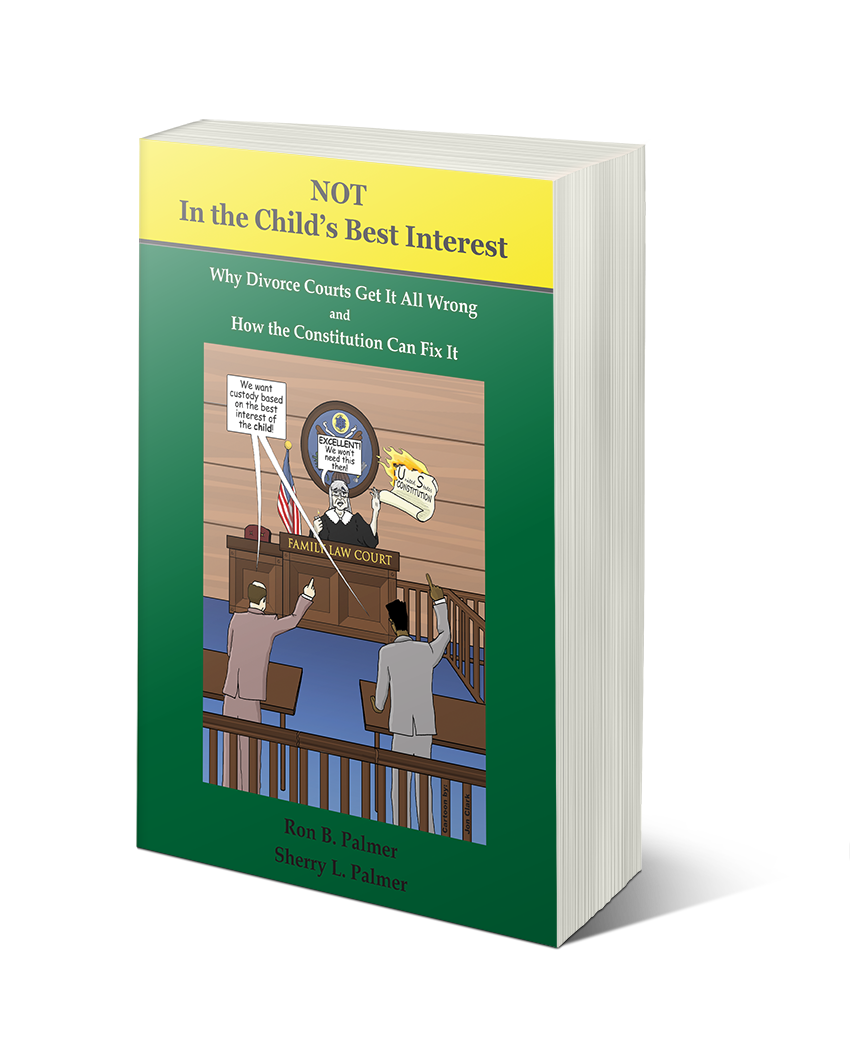
Master the Complete Constitutional Architecture
This article established the core premise in 2014, but our full legal arguments and tactical motion strategies have advanced dramatically. In our cornerstone work, Beginner's Guide to Family Law, we provide the step-by-step procedural blueprints to assert strict scrutiny and hold judges accountable to the Constitution.
Copyright Fix Family Courts, May 6, 2014 | Modified August 25, 2014 | Modified July 30, 2021 | Modified September 24, 2026