
What is Divorce?
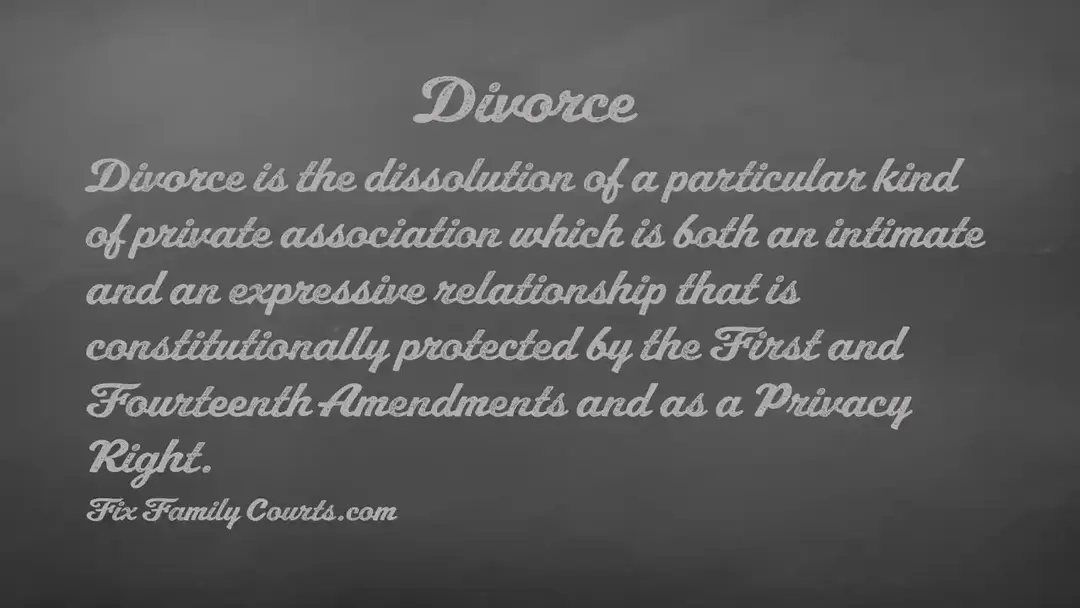
Divorce is the dissolution of a particular kind of private association which is both an intimate and an expressive relationship that is constitutionally protected by the First and Fourteenth Amendments and as a privacy right.
This is generally associated with an alteration of the legal status of married to the legal status of unmarried. Governments provide a significant number of benefits to married couples, and because of these benefits, governments claim the right to regulate marriage and divorce. However, the very idea that government can regulate marriage and divorce is based upon Nineteenth Century beliefs about marriage and divorce which cannot survive constitutional review under current understandings of how the constitution protects family associations.
In other words, divorce is an unconstitutional legal practice where state's claim jurisdiction over your privacy choices regarding intimate and expressive close family associations, asserting authority to tell you how and when you can decide to end a marriage and dictating what rights you have over your child when you make this otherwise lawful and constitutionally protected privacy choice regarding matters of conscience in association.
Their Definition
a decree by a court that a valid marriage no longer exists.
Fix Family Courts provides parents, attorneys, and family advocates with rigorous constitutional frameworks to safeguard fundamental parental rights. Under binding Supreme Court precedents including Troxel v. Granville, Santosky v. Kramer, and Pierce v. Society of Sisters, fit parents are constitutionally presumed to act in their children's best interests. State courts lack constitutional authority to abridge custody, parenting time, or parental decision-making without strict scrutiny and clear and convincing evidence.

Related Educational Guides & Authorities
Continue exploring constitutional principles, case law precedents, and procedural strategies.

Prevent you from wanting your rights protected | Constitutional Rights & Strategy Guide
Learn why fit parents must assert constitutional rights in family court despite intimidation. Discover how to...

DAILY TOOL: Protecting Your Child During and After Divorce
Fix Family Courts explains that parental rights are fundamental constitutional liberties protected by the Four...
The Constitution Protects Equal Parenting
Fix Family Courts explains that parental rights are fundamental constitutional liberties protected by the Four...