Affidavit
How sworn affidavits function as competent testimony to stop family courts from substituting unsworn lawyer argument for actual evidence.
The "Attorney Proffer" Injustice
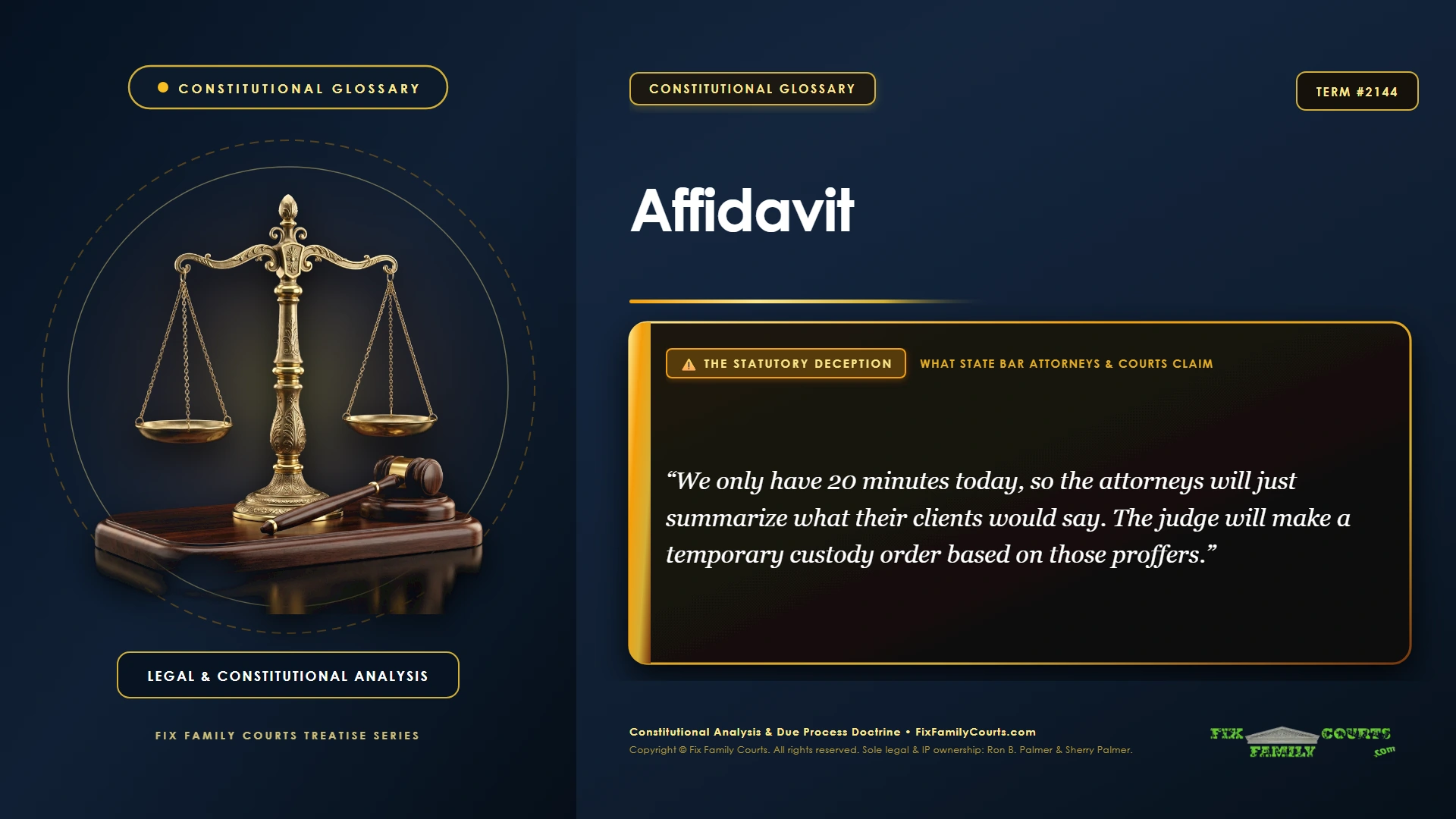
Family courts and lawyers routinely tell parents: "We only have 20 minutes today, so the attorneys will just summarize what their clients would say. The judge will make a temporary custody order based on those proffers."
This common practice is completely illegal. Unsworn statements by lawyers are NOT evidence. An affidavit is the primary sworn instrument that locks facts under penalty of perjury.
Affidavits as Competent Evidence vs. Unsworn Argument
An affidavit is a formal written statement of facts voluntarily made by an affiant under an oath or affirmation administered by a person authorized by law.
Under the Due Process Clause of the Fourteenth Amendment, a court cannot alter parental custody or enter restraining orders without competent, admissible evidence. When a parent files a comprehensive, verified affidavit setting forth personal knowledge, it constitutes sworn testimony that binds the court and cannot be overridden by unsworn lawyer statements.
Statements of Counsel Are Not Evidence
“Remarks, proffers, and arguments of counsel are not evidence upon which a court can base a judicial order.”
If the opposing side does not produce a sworn affidavit or sworn witness testimony on the stand, there is ZERO evidence in the record to support an order restricting your parental rights.
Holding False Accusers Accountable
An affidavit is executed under penalty of perjury, subjecting the affiant to criminal penalties for deliberate falsehoods.
Requiring sworn affidavits strips bad-faith litigants of the ability to make reckless oral claims through their attorneys without legal exposure.
The Conclusory Affidavit Trap
Many parents write emotional affidavits full of opinions ("he is narcissistic", "she is toxic"). Conclusory statements are legally void.
Stating feelings or conclusions allows the judge to strike the affidavit or ignore it as unhelpful hyperbole.
Recite direct facts based on personal knowledge: dates, times, direct quotes, and exact actions that prove your fitness and rebut false claims.
How to Object to Attorney Proffers
When an opposing attorney starts arguing unsworn allegations without a supporting affidavit or live witness:
"Formal Evidentiary Objection: I object to the Court receiving or considering counsel's unsworn statements and proffers as evidence."
"Bedrock procedural due process requires that orders affecting fundamental parental liberty be supported by competent, sworn testimony under oath. Opposing counsel is not a sworn witness and has filed no competent affidavit of personal knowledge. I move that the proffer be stricken and disregarded."