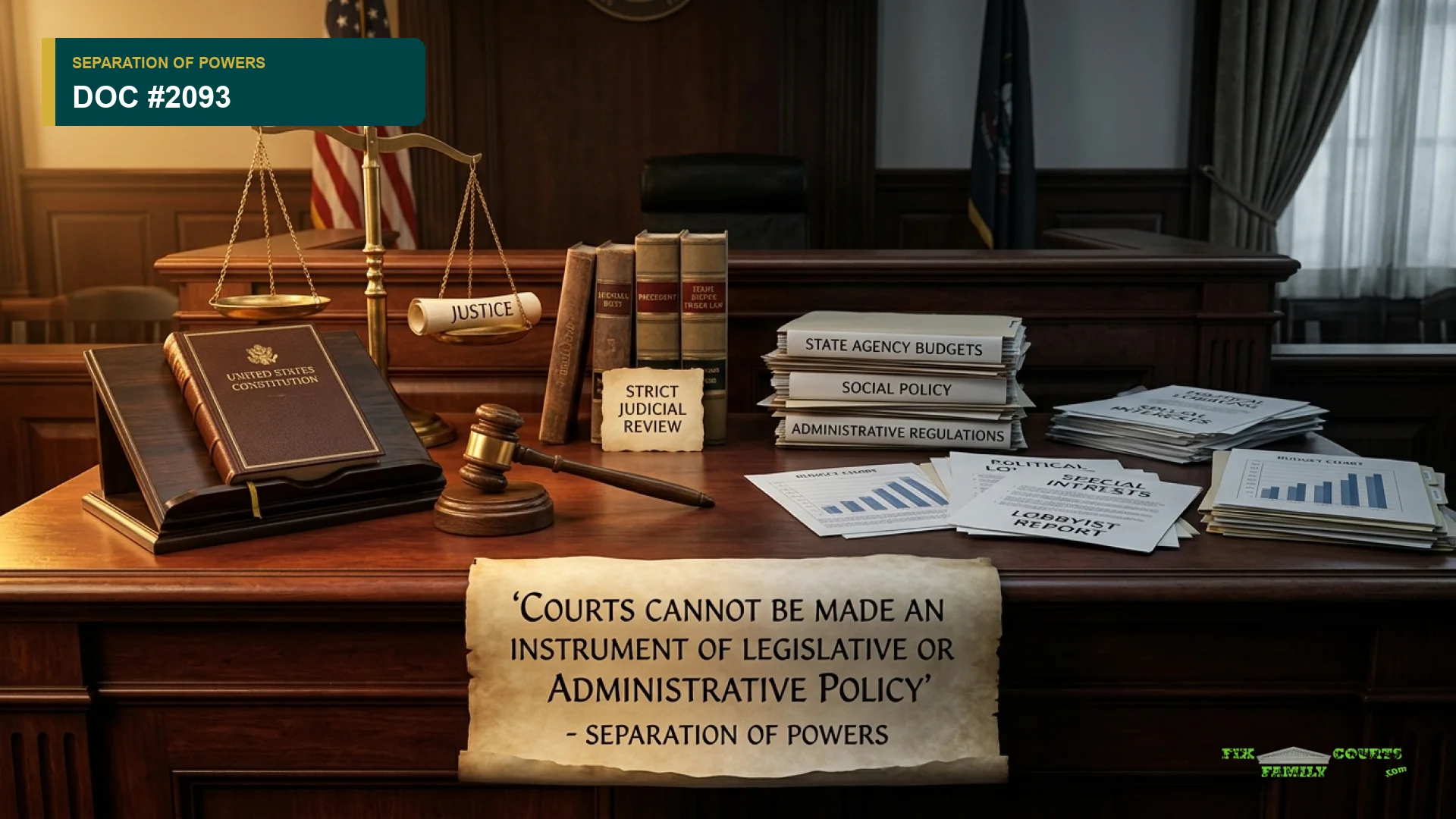
Overview: Making the Best Interest Determination is Political NOT Judicial
Who determines BEST INTEREST OF THE CHILD. Learn how to shut them down! By learning your rights you can stop the bullying by fighting back effectively!
Is the "Best Interest of the Child" standard being used against you?
In standard family court litigation, fit parents are routinely told that trial judges have unbounded discretion to divide custody and assign possession schedules. However, controlling Supreme Court jurisprudence strictly establishes that natural parental rights cannot be denied, stripped, or nullified without proving unfitness under strict scrutiny. Understanding these core constitutional protections empowers parents to hold attorneys and trial judges accountable to the law.
Executive Summary & Key Takeaways
- ✓ Exposes the procedural and constitutional defects in standard family court custody proceedings.
- ✓ Explains why fundamental parental rights are protected under the Fourteenth Amendment Due Process Clause.
- ✓ Equips parents with actionable legal arguments to counter judicial overreach and preserve the record for appeal.
Key Topics & Video Timestamps
Navigate directly to specific topics, arguments, and strategic insights covered in this presentation (1 indexed chapters):
Full Presentation: Making the Best Interest Determination is Political NOT Judicial
Complete presentation (09:52) covering core parental rights and strategic legal arguments.
Constitutional Principles & Controlling Precedents
This presentation directly implicates fundamental constitutional guarantees and controlling appellate precedents:
Cited Judicial Precedents
Constitutional Protections Invoked
Full Video Transcript
[Music] [Music] hi I'm sherry Palmer and this is Ron Palmer with fixed family courts and we're here today to go over wrongheaded thinking and best interest in the divorce courts when you are battling over child custody so a key factor probably the primary factor in your case is going to be best interests of the child the result of your case is going to be on how you present your case on paper and in person usually on paper that's called pleadings and motions the approach or strategy that you take will be dependent on how you believe of what you believe to be right but is what you believe to be right for you and your child going to
matter and what's at stake here is whether you're going to have the rights and the authority to continue to parent in a way that is beneficial for your child after the divorce or separation the way you present your case what we call framing is what's going to make the difference every attorney does it problem is they have only a few strategies they use with the same patterned bad results in order to get different results you're going to have to reshape the way you might have been taught to believe about roles and responsibilities and the way you think about the roles and responsibilities in divorce and the government's role in your life up after separation and
divorce there's a lot of confusion around best interests of the child and who decides it and win so let's start with discussing best interests of the child so Ron what role would you say the best interest plays in the custody which in divorce and separation according to the cases that you've researched well according to the United States Supreme Court the best interest of the child is not the determining factor for custody so long as the parents meet the minimum reasonable standards of child care beyond that the parents can put other children's needs before that child and the parents can even put their own needs before that child and all the Kahala state really can do
legally and constitutionally is to apply minimum standards across the board that apply the same to everybody what the states and the courts have actually done over history is because divorce has always been such a negative thing such a bad thing for all of our history the courts have felt very free to discriminate against divorcing parents to discriminate against single parents so anytime you have parents who aren't in a committed marriage the state feels that they are totally justified in depriving those parents of any rights they may have at any time for any reason without applying any standard whatsoever now we know from Supreme Court opinions that the rights of parents have nothing
at all to do with the marriage they do not attach from the marriage they do not derive from the marriage they are not granted to you by the state when you get married none of those things happen your parental rights are individual rights and they exist between you and each individual child and they arise the moment you take responsibility for that child and start to create a relationship with that child so once you've established your parental rights by creating a relationship with the child and caring for the child mend the rights are yours they belong to you and they're vested in you and no judge can constitutionally just come along and assign those rights to someone
else anything and everything they divorce court is about depriving denying your fundamental rights and they take all kind of liberty in doing this because again the fundamental bias and prejudice against divorce or single parents now when you walk into a divorce court somehow the courts think that they have all of the rights in the world the moment one of you request a divorce the courts think that triggers them to absolutely and totally take over all of your rights to your child and then to reissue those to whichever parent they prefer now this is where the courts grew up and this is this is the angle that you need to go to constitutionally and start saying wait a
minute this court had no authority under the Constitution no triggering mechanism to invade your parental rights with your child now why is this this is because your rights as a parent do not depend on your marriage whether the marriage exists of the marriage dissolves is irrelevant to your constitutional rights with your child so one of those core constitutional rights is the right to make best interest determinations for your own child and then not have the government's second-guessing your decisions about what is best for your child only in the most experienced extreme circumstances is the government allowed to come in and override your decisions as a fit parent and divorce simply is not one of these conditions
[Music] [Music] Oh [Music] you