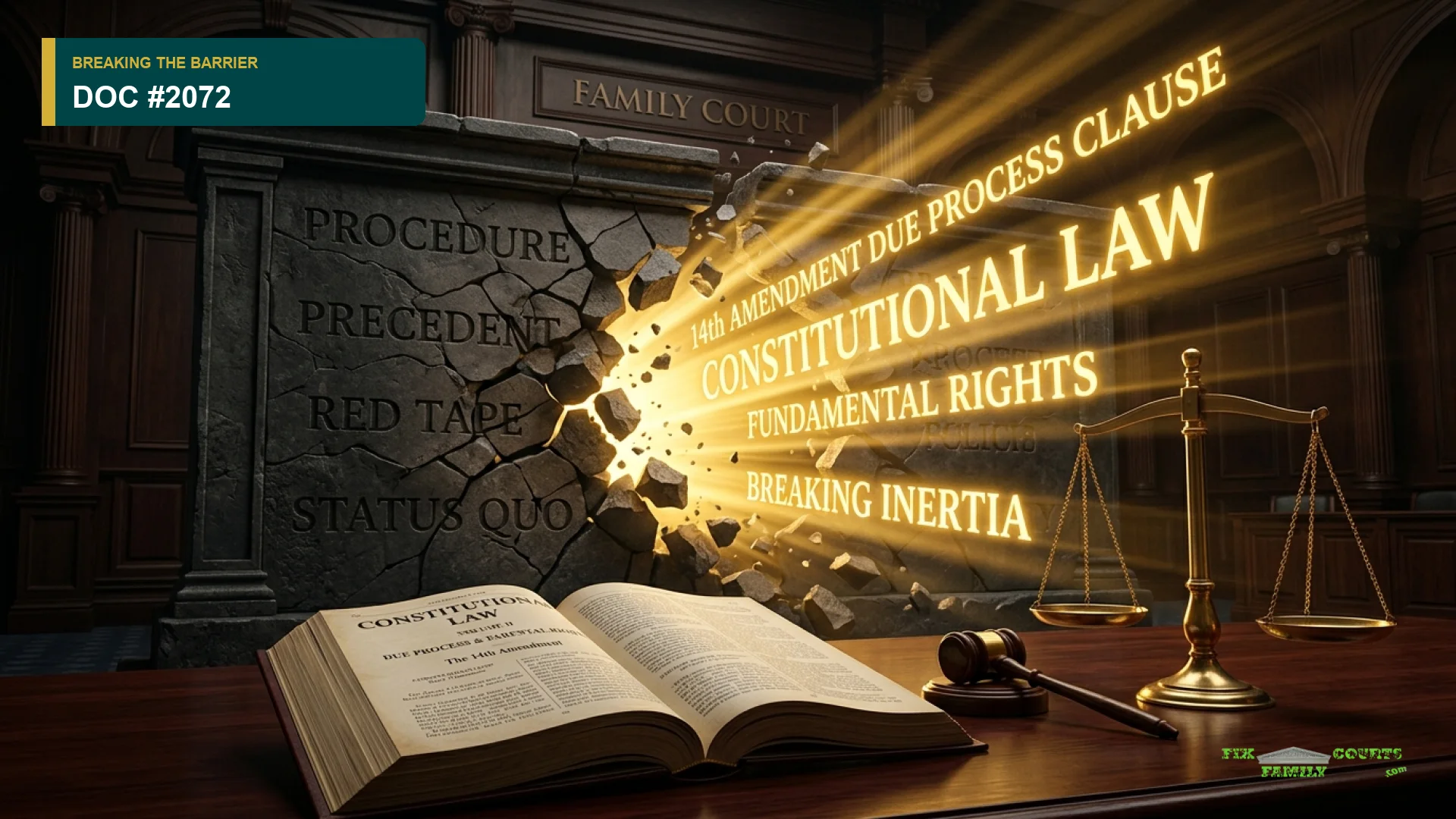
Overview: The Status Quo Barrier Can be Overcome
This is a small excerpt of Sherry and Ron B Palmer teaching parents about their parental rights and how to overcome status quo in a Turn Your Divorce Around webinar 3.
They also teach a class called Creating Your Blueprint where you can learn more in-depth information about your parental rights and how to argue these for yourself.
In standard family court litigation, fit parents are routinely told that trial judges have unbounded discretion to divide custody and assign possession schedules. However, controlling Supreme Court jurisprudence strictly establishes that natural parental rights cannot be denied, stripped, or nullified without proving unfitness under strict scrutiny. Understanding these core constitutional protections empowers parents to hold attorneys and trial judges accountable to the law.
Executive Summary & Key Takeaways
- ✓ Exposes the procedural and constitutional defects in standard family court custody proceedings.
- ✓ Explains why fundamental parental rights are protected under the Fourteenth Amendment Due Process Clause.
- ✓ Equips parents with actionable legal arguments to counter judicial overreach and preserve the record for appeal.
Key Topics & Video Timestamps
Navigate directly to specific topics, arguments, and strategic insights covered in this presentation (1 indexed chapters):
Full Presentation: The Status Quo Barrier Can be Overcome
Complete presentation (06:51) covering core parental rights and strategic legal arguments.
Constitutional Principles & Controlling Precedents
This presentation directly implicates fundamental constitutional guarantees and controlling appellate precedents:
Cited Judicial Precedents
Constitutional Protections Invoked
Full Video Transcript
they're treating divorcing or separating parents like second class citizens they're saying it right in their handbook that you have equal rights to your child when are your rights brought up when you're going through divorce where did those go how did they disappear they don't want it they don't want to address that all they'll tell you is well you both have rights and you're in Conflict therefore you no longer have those rights that's wrong so keep in mind that fit parents always have full right to be a parent and this is a then this is clear if one of the parents dies you don't have to go ask the state to give you the other half of
your rights you always have full rights and those rights are always in Conflict when you're married you have a natural means of resolving that conflict in most cases when you're single or divorced the only difference is you don't have the marriage to help navigate the conflict you have to come up with another way to navigate the conflict that does not mean you lose your right rights are always in conflict in lots of areas and the Supreme Court never says well because somebody else has rights that conflict with yours we throw yours out the window that is not the way conflicting rights work okay so if the current status quo is unconstitutional and damaging children why are they
continuing and how do they keep getting away with this if they're not allowed to do these things well the simple answer is you've been letting them and the attorneys have been letting them how do you overcome this status quo so now you know what it is now you know what the judges are thinking you know what the lawyers are thinking and you can all go and visit those videos and look through those handbooks and guide books and I encourage you to do so the end of this you will see resources and it will give those links again Elon Gonzalez's father did it he overcame the status quo this you see Alon I don't know if I'm saying Gonzalez
Gonzalez sorry Al Gonzalez's Uncle holding him he had lived here for at least I think two or three years during the fight when his father was trying to get him back after his mother had tried to bring him over from Cuba and the mother is they think that she drowned right so for those of you who don't know this happened uh about 10 or 15 years ago in Florida this boy's mother tried to get him out of she came across and and died in the process he made it to Shore and he then they found his parent or his family members who were already here he stayed with them for about 3
years as Court proceedings went on and his father in Cuba who did not know he was leaving tried to get him back and they went through the full court process and the the Supreme Court said denied the petition from the lower court trying to overturn them making him go back and the Supreme Court said no we're not going to hear it he gets to go back even though this family here said think about the child what's in the child's best interest all of these things the Supreme Court said no the father has rights and the father gets the child it doesn't matter that the child has to go back to Cuba it doesn't matter that we don't
like it it doesn't matter that we don't think it's in the child's best interest the father determined that and he wants the child back in Cuba end of story yeah and I I know parents in this presentation this webinar today that just this week um they were put in a position where the courts made them feel like and and I'm not I'm not recommending this kind of force but they made them feel like hey we can't return your child we'd have to use fours and how many of you have faced that where the relative the other parents is withholding the child encouraging the child even though they say they're not withholding them you know they're
influencing them and then the courts and everyone says forget it we we can't help you the child won't come oh my gosh we can't use Force well here you go they're using Force to return the child these relatives refus to return the child even after the Supreme Court made their ruling they went in there they got the child he now leads a happy productive life with his father he's grown who else has overcome status quo slaves have done it does it still happen does slavery still happen sure it does the picture on the left 2006 that's that's a man on I believe he lived on an island but he was taken from his home Village
and placed onto a fishing boat and forced to be enslaved in fish for years and years and years he was he was enslaved he finally was rescued from that and is no longer enslave but yes slaves overcame it but does it still happen it does and that's why I'm telling you that even though Supreme Court has said that you have rights and you're wondering how is it still happening well it does still happen if you're not fighting for those rights and the reality is you're in a much stronger position because when the Constitution was first created slaves did not have rights under the Constitution they were explicitly prohibited under the Constitution and slavery was upheld
constitutionally and by the Supreme Court for the first hundred years and that remain that stayed until the 13th and 14th amendments which actually changed the US Constitution the 13th Amendment disallowed slavery anywhere that the United States governs not only in the United States but any of our territories or possessions so it completely does away with it and Ron Ron just recently found another gold nugget in a case regarding the 13th Amendment which we're not going to unveil today because that's going to be in the next webinar on undo burdens but he's he's chomping at the bit because it's going to help those that are fighting alimony right so the bottom line here is the
Supreme Court has been very clear that parents have rights and so our position is much stronger than than the position of women was when they won and the position of slaves when they won and blacks when they won their more than just Freedom From Slavery but equal rights in society right so we are in a much better position but just like them we have to fight yeah so if they could fight for right slaves when they didn't even have them at all and women could fight for them then we can certainly fight for them when we do have them we just have to learn what they are