
How Civil Rights Attorneys Win Federal Lawsuits Against Child Protective Services
The Constitutional Rule: Under the Fourth and Fourteenth Amendments, social workers and state child welfare agents cannot seize children from fit legal parents without a judicial warrant or imminent, exigent danger of severe physical harm. Federal civil rights lawsuits under 42 U.S.C. § 1983 hold predatory agencies and individual workers financially liable for fabricating evidence and orchestrating warrantless seizures driven by Title IV-E funding schemes.
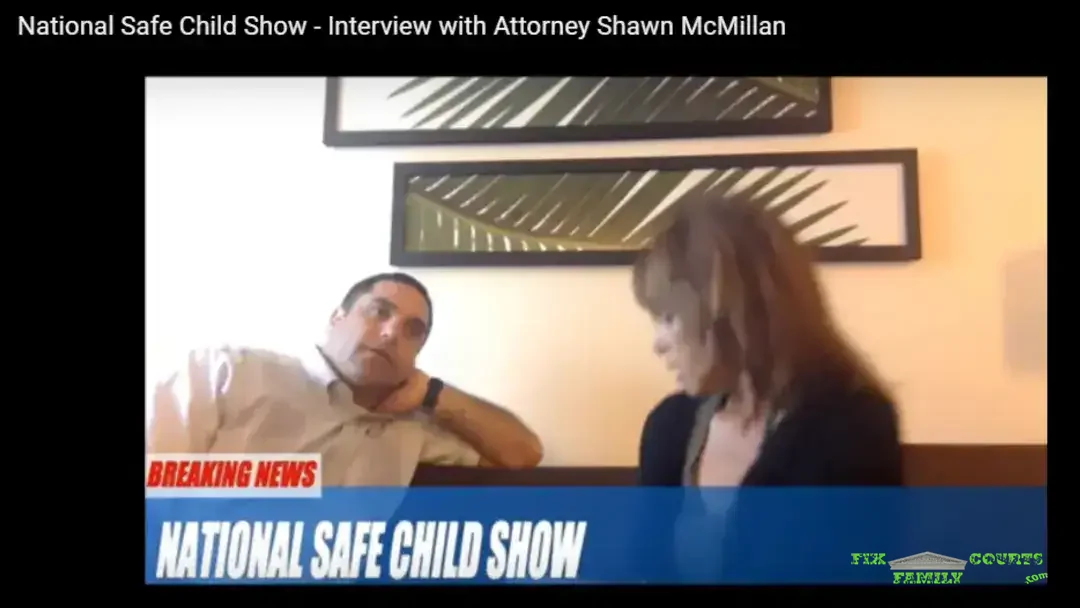
Tammi Stefano of The National Safe Child Show interviews California civil rights Attorney Shawn McMillan, who reveals the systemic operational realities of Child Protective Services (CPS) litigation. McMillan discusses how even he was at risk of having his children seized by CPS because he aggressively litigated these civil rights cases. His children are grown now, so he has much less to worry about.
McMillan states that CPS agents “violate parents’ and children’s Constitutional rights by misrepresenting facts to the court, either when they remove the children from the home, or afterwards.”
McMillan makes his living by exclusively suing county and state agencies involved in child abuse investigations. He is keenly aware of how difficult it is for parents to be believed in courtroom proceedings. He understands that social workers are widely perceived by the public as “doing God’s work,” which creates formidable automatic biases that contribute to why this lucrative racket has operated unchecked for generations.
Critical Legal Counsel for Parents Facing Government Agents
Attorney McMillan warns parents never to blindly trust social workers, police, or government personnel claiming they are merely “here to protect children.” McMillan emphasizes:
“You don’t talk to government. The government is not here to help you, and a lot of people don’t understand that. They will take something from you, and it is usually some measure of your liberty. They are going to take something from you. You are going to lose your rights as a parent.”
Parents in divorce and custody battles should adopt the identical policy. Attorney McMillan advises parents to always ask themselves: “What am I going to give up in exchange for whatever the government is promising?” It is almost never worth the bargain. You forfeit essential liberties and open the door to losing your constitutional parental rights.
McMillan notes: “If I can make a business out of it, it’s a bad thing. People like me should not be able to exist in a free society.” He explains that many times even the line social workers are kept in the dark about how higher supervisors manipulate cases. McMillan has witnessed social workers break down on the witness stand in tears once the broader scheme is exposed on cross-examination. One social worker even resigned her post immediately after trial.
This institutional misconduct is an entrenched problem across government welfare bureaucracies due to a complete lack of independent judicial oversight and public accountability.
“They’re Stealing Kids” — Corrupt Social Workers the Norm — Good Social Workers Don’t Last
While some might assume federal civil rights lawsuits are a recent development, attorneys like McMillan have been prosecuting these violations for decades without systemic legislative reform. McMillan has been litigating against CPS agencies since 2005, alongside associates Bob Powell (since 2002) and Donnie Cox (since 1995). Together, they have recovered over $40 million in damages over the past 20 years.
Yet welfare agencies continue the exact same illegal tactics. As McMillan observes: “We should all be out of business with the first big win. But we are not. That’s because they are getting enough money out of the system. Whatever we are doing is a drop in the bucket—just a cost of doing business for them.”
The Title IV-E Financial Incentive Architecture
These child welfare bureaucracies are subsidized by federal reimbursement schemes established under Title IV-E of the Social Security Act. Specific federal revenue streams attach to each juvenile court finding:
“That creates two incentives. They have to get as many kids in as they had last year or else they have to make up the shortfall from the general fund,” McMillan explains. Title IV-E funding structures incentivize agencies to keep children entangled in the system for up to 18 months, after which primary federal subsidies expire.
The County of Los Angeles maintains internal written manuals detailing these funding thresholds. Supervisors oversee units of 6 to 8 line workers and systematically rewrite investigative reports to ensure every required statutory finding is secured from juvenile court judges—guaranteeing that federal funding streams remain uninterrupted.
McMillan details the extensive cycle of hearings that unfold over this 18-month timeline. Between initial seizure and final disposition, there are at least 7 or 8 distinct funding benchmarks. In the Duvall trial, county officials testified that the State Attorney investigates approximately 156,000 child abuse allegations each year in Los Angeles County alone.
Federal revenue flows down to state treasuries and is disbursed to county agencies. In California, state officials were unable even to provide McMillan with an exact aggregate total—an estimated $700 million to $900 million in 2009 alone. If agencies do not seize and retain a sufficient quota of children, their massive bureaucratic overhead cannot be sustained.
The Lena Duvall Verdict & Procedural Obstacles
In one of McMillan’s major victories, the Lena Duvall litigation spanned five full years. Even though Duvall prevailed in federal court and demonstrated that agency social workers violated her civil rights, the federal jury verdict did not automatically return her children. Regaining legal custody requires separate, arduous proceedings in state family court.
Duvall's federal suit came within days of dismissal under California's strict five-year trial statute. Had the trial judge granted one more continuance, the court would have lost statutory jurisdiction, permanently extinguishing her claims.
Bureaucratic entities refuse to modify their unlawful conduct even after repeated defeats in federal court. Lawsuits alone cannot eradicate systemic incentives without fundamental statutory overhaul. As the documentary Divorce Corp famously summarized: Follow the money.
Dr. Michael Riley Deposition Video (Orange County CPS Director)
Evidentiary Record: Civil rights attorney Shawn McMillan cross-examines Orange County Social Services Agency Director Dr. Michael Riley regarding warrantless child removals, fabricated evidence, and agency financial quotas driving child seizures.
Full Sworn Deposition Video
The full sworn video deposition is available online for public examination and legal analysis.
Full Video Transcript
I am here with Sean McMillan good morning good morning I'm going to I'm going to get my coffee yeah it's a good thing bright and early and you are ready for uh deposition deposition right this is a typical work day for you or um yeah sort of I mean you know get up and go to the deposition and do it yeah it's pretty much typical work well it's typical in the sense that it's a deposition day when I'm back in the office I'm not going to be looking like
this and you know all dressed up and stuff we flip flops t-shirts you're going to be comfortable yeah I'm going to be comfortable I don't work well when I'm not comfortable all right that's probably the most important thing so Sean McMillan um he's been referred to as a Street Fighter um or the Street Fighter for the rights of parents and children you your focus is going after the child protective services right we Sue uh social County government social workers okay and um government agencies that are involved in you know you call
it child abuse investigations and that's what we do that's all we do and you sue them because I mean why does the law who come to be uh typically in fact exclusively what the allegations are is that um they will violated either the and by them I mean the government will have violated either the parent or the child's constitutional rights when they either seize the child from the home or after seizure when they misrepresent facts to the court and when I'm saying they I'm again talking about government social
workers government social workers and it's a lot more common than people think it is so if I can make a business out of it it's a bad thing it's a bad thing it's a bad thing people like me should not be able to exist you know at least in a free Society but yet we're here and there's uh you know eight of us in the state that do the work and we're all doing just fine we're busy as hell so that's indicative of a very Dee rooted problem
that you know needs some attention within the Child Protective Services Agency government in general government in general yeah they all I look at this CPS problem as being symptomatic of similar problems across the board in all agencies of government and that the problem is they just have too much unchecked power and nobody can do anything about it so where is the oversight for good question clearly not in the agency non-existent I don't think it is do they say that there is an oversight well when when you see these
interviews whenever there's a big case or like a child death something like that the media gets out and they interview all the top management the top management always talk about oh how we're looking out for the best interest of the kids and we're trying to make things better and this and that it's all crap you know you don't see any changes you don't see um any results you just hear a lot of mouthing okay and uh so it's a smok screen to to bring people down and when kids die
they want to seem like they're doing something but they really don't but you're saying your opinion is I don't see it I mean maybe they are working very hard behind the scenes whatever but I gauge my um Impressions okay of government not just government but everybody really on results and if you say one thing and we don't see a result that's consonant with whatever it is that you're saying okay then I start to think you're bullshitting me right and um whether you are or not the results
speak for themselves right that's absolutely true so you know so they are bsers yeah I because they're not prod they're not you don't result that's right you don't see the results it's a result driven issue and if if you're telling me Oh I had 570 child deaths in foster care last year I'm going to fix that I'm going to do this and that the other thing we're going to get it straightened out and then next year we got you know 500 570 even three even one
child death death and Foster Care I mean come on as a result of negligence of the foster care agency as well as any result I mean if you're going to take a kid from a home whether it's an abusive home or not you have an obligation to make sure that you put that kid in a safe place that's right and if that means you got to be there every day looking at the kid to see what's going on and make sure they're safe then that's what you got to
do that child deserves that well yeah and but what do we get that's not happening you're in business I don't see it you're in business yeah I'm I'm still around so and and you you make a healthy living because well yeah we do all right okay we do all right there some some some cases require a lot more capital and effort than others and when you get one like the one I just finished the county uh they drew a line in the sand and they just said we are not going to
resolve this case or any more cases with me it it was a personal issue and which was fine with me because they're not Street Fighters well I don't like to look at it necessarily that way but you know when I get into a fight I'm going to fight and that's why I'm there I I actually and they don't understand this is I actually enjoy the fight right so when they when they draw a line in the sand and say oh no more that's good that's good because now
we all know where we're going and what we're doing there's there's no more um you know plann Mr Nice Guy or whatever trying to beat around the bush just go direct directly for the the heart now that we know we have a relationship we know where they stand they know where I stand and we just do our thing makes it very simple go directly for the heart why I mean what are they doing that has the fire in you the passion in you that you stealing kids stealing it's really
simp simple and they do it for you know I'm not anti-cps I'm not antisocial worker at all by any means I know and I recognize that there are kids out there that are in tough situations and they need help I I recognize that and we need we have an obligation as a society to help those kids that's right it's our duty but that's not what we have right now in terms of a system what do we have what we have is a system that is it's
inherently corrupt in that the entire funding scheme for all these County agencies and state agencies too like Arizona it's they have very similar system but it's run by the state instead of the county um but all these agencies are funded by the same Federal funding schemes and those Federal funding schemes are tied to the number of kids in the system so inherently and I did a deposition on this it's online it's Michael Riley and and we talked about this and essentially what happens is the County's funding for its Child
Protective Services Agency whatever they want to call it okay is derived from two sources in California one there's a state stipend and the other there's Federal it comes from title 4E of the social Security Act and um what happens is for every child that's brought in there's a specific funding stream for every finding that's made in the juvenile court if there's no finding there's no funding so that creates two incentives one is we got to get as many kids in last year as or this year rather
as we did last year otherwise we lose our funding base and it gets reduce the county has to then make up the shortfall from the general fund and that's that's a bad thing from the county government's perspective so we got to minim minimally get at least as many kids last this year as we did last year okay secondarily on the funding side of things for the findings once you have a a court process in place for a child we have to get a positive finding at each stage of the proceeding
otherwise we don't get money so in other words if there's not a substantiation somewhere you're not going to get your money they are not getting paid yeah and that that came out in this last trial that we did I'm going to I'm going to publish the um I don't have video Depo of that one it's on it's written but I'm going to publish that online once I get some time and it's it's very clear that if there's not uh a positive finding at each stage in the case you're
not you're not the County's not going to get its money and that carries on for 18 months so a lot of these cases you see them going all the way through to the 18-month maximum before they'll either get uh dismissed the kids will get back with their parents or there will be a permanency hearing and the kid will get you know adopted out or something like that they'll run it for 18 months because that's when the federal funding cuts off so is it automatic I mean Department of Children and Family
Services goes into a home they remove the child MH from that time is it have you ever seen any documentation that it's automatic that that kid is or or that agency is somehow going to be involved in this family's life for the next 18 months automatic it's down on paper somewhere it's it's not necessarily automatic it's it's by Statute okay on once there's you take the kid you go you have your detention hearing if the judge makes a positive finding then you have a maximum of 18
months to reunify with the child I think it's 12 months and then there's an extension there's a a rule for an extension for the specifics on that you'd probably be better talking to somebody like Nicole Williams okay um who works in the dependency Court I don't work in the dependency Court I only have a r enough knowledge of that system to enable me to do my work than I do on the Civil Rights side of things so I don't do dependency cases I don't I'm not you know a dependency law expert but
what I can tell you on the funding side of things is number one yes there is a written document that lays out the steps for County social workers and is produced by the County of Los Angeles and this is what's interesting about it they do not train the line workers the people that are actually out in the field doing the work they do not train them on the funding issues they only train the supervisors so you know each supervisor typically will have six to eight line
workers that're out doing investigations and things like that okay and they do not communicate the funding mechanisms to the people that are actually in the field doing the work yet they do review reports amend reports you know stuff like that and a good typ guy to talk to about that is Jerry Dominguez Julian Dominguez and he can tell you all about that stuff and what happens is supervisors will actually come in and rewrite reports and do some really hinky stuff right um and I haven't gotten
anybody to admit it in a deposition but you can sort of put two and two together you have the one deposition saying if we don't get findings at each stage from the juvenile court we don't get the money and then you put that together with what I see in my practice where I see social workers lying about parents all the time in their reports how do you know that they're lying the the best example is the case we just finished the the social worker in a
report says oh I talked to this doctor and this doctor gave me this this list of horrible things about Mom and Mom's a horrible person and so you should keep the kid away well you know I read that I said the first thing I do um is I'll call the doctor right I say hey hey you know doctor this this is what this person's saying and you know what do you have to say about it and in this particular case in uh rafal's case um the doctor said what are you talking
about I never had that conversation I I don't even know who this person is did he ever have any conversation with the Department she she she no no no uhuh she didn't and and they came in that when they found out about her they they questioned her and by they I mean the county right and her response is really simple look I've had contacts with DCFS on other patients right and when I have those types of contacts I document them absolutely she it's either in the chart or it's in the
computer system or both she doesn't get paid more if she writes this or doesn't and it's a c issue if if somebody says oh your doctor violated your privacy rights right by talking to this third- party government agent right she has her own liability issues so she documents everything so that she can definitively tell you whether or not she did something right so I asked her well you know it would have been a long time ago maybe you just don't remember and she goes no cuz we we had arranged a call
she says no I I went back and I looked and I went through all my stuff and no it never happened I can tell you definitively it never happened they blatantly lied to build their case to get their funding to make sure that this parent and this child were going to remain separated the system well in the system in the system because remember the longer the kids in the system the more money they get because they get money at every stage of the proceeding so how many increments if you know are
there uh is it every six months no there's more than that there's more than that yeah there's a lot of hearings that go on between the time of seizure and the time of either return or final disposition um I mean I know I can send you the exhibit from trial that would be great it's it's one page 8 and half by 11 sheet of paper okay it's in landscape I'm sort of drawing an image in my mind there's at least seven or eight funding steps where there's
funding available depending on the finding of the court wow and when you think about it I don't know if this number is real but in this trial we just finished they they claimed they were they were investigating 156,000 child abuse uh allegations a year in the County of Los Angeles and um you know that was a statement by the attorney an opening statement I assume it's true because the attorneys are bound to only make good faith statements that officers of that's right that they believe in good faith
are going to be supported by the evidence no witness ever came in and supported that number so I'm sort of just stuck with you know the attorney's representation of what they're doing right but why would he lie you know what why would you why would you inflate that number it wouldn't make any sense so that's the number they gave the jury and the opening statements in the Devol matter and that's a lot of kids that's a lot a lot of children that's a lot of money I'd love to do a fo you and I
think I may you should just to find out where that number is sourced from we we we deposed the cdss California State Department of Social Services to find out how much money the because what happens the money comes from the federal government to the state then the state disperses it to the counties and we wanted to find out okay well how much money did Los Angeles County DCFS get in 2009 that was the year that all the things happened for this case right how much money did they
get for their child protective Services Agency turned out the state couldn't even give us an exact amount they said it's somewhere between 7 and $900 million for 2009 and um they couldn't even give an exact number that was the best they could do okay if they don't take children their agency dies dies it does it it fails to exist that's correct and in fact if they don't take enough children there's not enough funding to support the overhead they've got right now and they need children they have to
have them and that's the gasoline for their automobile that that is correct that's what fuels the entire system and you you look at a lot of these counties it's sort of interesting I did this case up in Santa Barbara and uh you know their court buildings are all kind of run down and things are falling apart you drive into this little complex there's this beautiful brand new really nice expensive looking building that's their children's court and then right next to it it is their uh their version
of DCFS I forget what they call it up there it was beautiful new building was their uh administ the social services administration building nicest buildings in the county man and yeah they've got all the money they're the ones that are generating the revenue so they're getting the nice facilities and it's the same out in Riverside their new facility for their children's Court their new facility for the their version of CPS out there nice places really nice do you think that if there was transparency as far as the
records for these dependency cour should be transparency in all aspects of it in all aspects what what they claim is and by they again I mean the government what they claim is that we need to keep it all secret to protect the interests of the children and the parents that are involved in these you know highly sensitive cases that's just straight up [ __ ] you look at the rape shield laws you know you go somebody rapes a woman and we want to protect the identity of the woman to sort of you
know protect her privacy in the community so we have rape shield laws but you still have a public trial a public prosecution a jury gets to sit and weigh in on on what they think happened there absolutely and there is no good reason why that same system could not be applied to these child protective cases so the only reason that they justify hiding under under this Shield their Shield yeah their Shield is to protect the children's identity to ultimately protect the children well that's the claim ostensibly that's
that's why there's these confidentiality Rea that's what they claim in reality as a practical matter the um confidentiality statutes are really used as a shield to protect erant social workers and the government right it's not to protect the children at all not in my view not as a practical matter it doesn't have that effect that that may be the intent but it doesn't have that effect well it's the excuse right it's the excuse and and what I find so ironic is in Family Court you might be dealing with a child
that once was in dependency Court yeah and the family then goes to family court and now it's all public and everything is public MH so are they failing to protect the child there or are they being transparent well not everything's public remember the only thing that would be public coming out of dependency Court into Family Court would be the dependency Court exit order because that becomes part of the family court file that but I mean but but the the the family court matter from that point on
is all public anybody can go in I can order a transcript I can sit in it's public it's the same kid it's the same issues and and chances are in a custody battle that a lot of that stuff's going to come up yes it's going they're going to talk about that right right so it doesn't make any sense it doesn't make sense yeah well that's the problem doesn't matter that's the way it is though I me the dev that's what we're stuck with yeah so well for the time
being yeah for the time being until you Sean McMillan take enough money out of I don't do legislative work it take legislation to change that but how many millions will it take for the the agency to have to pay before somebody says we have to stop this that's a really good question we've been doing this for and I'm not the only attorney doing this we've I've been doing it since 2005 uh Bob Powell's been doing it since like 2002 you know Donnie Cox has been doing
it since 1995 just between you know our three firms we've probably taken close to $40 million out of the government over the last what is that 20 years million yeah and there're still they're still doing the same stuff we should all be out of business we should all be out of business I should be able to go back and do my my cool um you know commercial stuff and have a peaceful quiet life as should Donnie and Bob everybody but we're not so what's going on system is we should be out of
business should have been out of business with the first big win that's right but we're not so what does that mean it means that the government really doesn't care they're getting enough money out of the system so that whatever we're doing is a drop in the bucket and really doesn't matter it's just a cost of doing business for them have you ever seen any documentation where they factor in these types of losses uh no I haven't but I wouldn't be surprised that I mean insurance companies do it um you know
all other entities that are taking I I would not be surprised but we will never see those documents because that would make them look really bad and they know that we're going to throw everything up on the net so it's never you're never going to see that at least not in my cases I'm going to see if I can find it I've got some good whistleblowers if you can find it that be that would be great because I'll be able to even tell you guys you know what shoot for a higher
number because they haven't spent that much that they have put on paper yet yeah Lena Duval she won MH after years yeah yeah a long time the litigation was five years okay and um you know that that alone was just massive we were actually up against the 5year statute if the judge had continued the trial one more time he would have lost jurisdiction over the case it would have been dismissed that would have been the end of it her statute limitation not statute limitations but jurisdictional
cut off for having the case tried ended I think on September 11th or something like that and no I'm sorry it's November 11th because we started trial on uh September 12th and so basically Bally we were what a month and a half off of losing jurisdiction over the case completely what would happen if that you lose the case if the court doesn't have jurisdiction to impanel a jury to hear it you're done yeah it was it was really tight wow I've never heard of that yeah I've heard
of a lot but I haven't heard of that five years from the date of filing if you do not and panel a jury swear your first Witness by that five-year Mark you are done and you don't get another shot there's no recovery from it unless the other side agrees to wave the statute that's what I was thinking okay so yeah there is a way to do it stipulate around it but think about this for a minute is anybody any defendant ever going to say oh you blew it you can't get me but you
know what it's okay I'll I'll go ahead and wave and and you can go ahead and get me anyway no come on it's not going to happen it's not going to happen so they lied in Len's case they costed her well let me do this okay because the judge cut that part of the case out so the jury never got to actually decide the LIE issues so all I can say at this point is we alleg they lied it's not been proven to the satisfaction jury in a court of law but
in your mind it's been proven there's substantial evidence to support the allegation that's as far as I'll go otherwise we have defamation issues and all kind of stuff right but in my view there is substantial evidence to support the allegation that um at least two social workers seriously lied seriously lied yeah there there were a lot of other misstatements and omissions by other social workers right but the ones that are the most obvious are the ones with the doctors and it's that's what I was just thinking I mean
when you say I spoke with the doctor and you call the doctor and the doctor says never happened never happened I keep good notes and I didn't speak with them and a lot of Lena's case I mean had two doctors actually that said the same thing never spoke with them never spoke with them folks it is up to you to get in touch with your doctors if there are any allegations involving them have them write an affidavit I mean it would be helpful for for the attorneys it would
well it would have been helpful for rafen in the very beginning um and this is something people should look out for when I I tell new attorneys and you know Sam I told Sam this he first came to work for me um you know he's he's going through all these records goes well how do I know what the lies are right I said oh it's really easy it'll just look for quotes that's the first red flag is because they will quote and whatever is in that quote generally speaking not
always sometimes it's true right but generally speaking that's where the gold is and you go talk to that person say well did you say this and generally not always but generally it's been my experience that when you talk to the person who's quoted they'll tell you either the conversation never happened at all or at all or no I absolutely abolutely didn't say that I wouldn't say it because it's not true and J is how they probably said the opposite of well either the opposite or something that
was misconstrued or or misstated in some way and twisted into whatever supported you know whatever agenda the particular reporting worker had at the time right now recognize there are good workers out there there are honest people that do great work yes I never really see them you won't and I won't you won't you never will see them because they do their jobs that that's correct so the you know I'm I'm talking in sort of broad generalizations right but you have to recognize that you know the the mom who throws her baby in
a garbage can you know the drug addict whatever throws her baby in a garbage can and walks away she's not going to call me absolutely and say my rights were violated so I'm never going to meet her I'm never going to know her social workers I'm I'm just not going to be PE Fernandez that killed her son you're not going to get a call yeah I'm not going to get a call from her so so you have to understand I have sort of a biased and
jaded view having not experienced really ever the other side of the spectrum and I'm sure they're out there it's Abol you know it's like police 99% of the police are great right it's the it's the you know One Bad Apple that gets out and it it spreads uh dissent and angst in the public against all police and that's not really fair it's not justified so I want to sort of temper what I'm saying here with that same sort of um idea is that I I know that not all social workers are
bad just the ones I come in contact with and not even all of them frankly some of them they're new they get into a position and all of a sudden they're getting pushed around and and they they know in their heart I've had social workers during a deposition when they figure out what happened actually break down and and lose it I mean start crying and be really distraught over what role they played so so you've actually had a deposition with a social worker that at that moment while you were questioning
and laying it out very clearly yeah and not broke down broke down and realized at that moment yeah realized at that moment the role that she had played in really ruining these kids' lives and unwittingly right she didn't realize what was going on or or what the people before her had done in terms of the documentation and what was going to happen afterwards and um she was in a position where she could have derailed the whole thing right and gotten the kids out of the situation had she looked a little
deeper right and this all sort of came out you know I'm showing her stuff during the deposition and talking to her about what happened and she you could see it she just started to realize what went wrong and she broke down she had to like end the day she wasn't tears and it it was NS I have that on video too but I didn't really feel comfortable putting that up that's not fair to her right you know she was a good she she a good work
and and frankly she quit she's no longer with the agency she quit yeah she took she just after the Depo mhm good for you yeah well there there's a bunch of them like that you know they they uh these kids they go to school they get their masters in social work they want to become a licensed clinical social worker they have to get 3600 hours to get their to qualify for their license okay so a lot of them they'll come in and they'll they'll do there's actually a program I
think with uh Cal State Fullerton where the county will pay for them okay to go get their mssw so long as they'll work for the county I think it's two or three years afterwards so a lot of people come in they'll do that they just bite the bullet get their 3600 hours get the hell out of Dodge and then go do something else so there's quite a few of those and those typically are good workers and you know I've I've deposed um I don't know somewhere between 100 120 social workers
the last since 2005 and generally speaking I can tell you which ones are lifers and which ones are going to be gone in a year or two you know it's just a a personality difference and you can see it in your first you know 20 minutes with them and uh it's interesting such a turnover well yeah there is and that and that's what's interesting is is typically the ones that have been there longer than three or four years my defendants right right they're they're rotten to the core they are rotten not
only are they rot to the no you can't stay there and not be tainted right right and and those ones generally um I'll get them I'll get they they they don't know they they don't prepare well and they don't know what's coming yes and we'll get them we lay little traps for them and they step right into them and you nail them and uh that's that's what happened Lena's case that's what happened in the Fogerty case in Orange County every single one of these things if you're persistent and
you take enough time with them you're eventually going to get them you know I always was taught Liars will always give themselves up because they can't remember that's right their lies that's right that's that's why it's important all you know tell the truth tell the truth if if you tell the truth you never really have to remember what you said because it's just going to be happened that's right and you just tell the story again and again and again that's right Lena wins $3.1 million what was that money paid out why
did it's not paid out yet well well why why did they judge make that judgment 3.1 million based on what that was first of all that that's the jury's number that's the jury's number that's not the Court's number that's the jury's number okay and um you know what it's hard to tell cuz what goes on in the the back room with the jury it's it's secret unless somebody wants to share it with you after the verdicts come in right and they typically you know as an 7 and a
half week trial everybody was anxious to get out of there absolutely and the verdict came in um the defendants had like 10 people out in the hallway they just kind of swarmed the jury but the jury had a limited amount of time to go get checked out in the jury Lounge so that they could be you know released and free and and um so they they didn't have a lot of time so we didn't really get to talk to them to figure out what the thought process was and coming up with
the number what I can tell you is that the county and their closing argument um told the jury that they should only give rafina $10,000 per day for the three days between the seizure and the detention hearing that was the defendant's position is we're not guilty we didn't do anything wrong but if you disagree and you think we did do something wrong you should only give her $3,000 and that that's it um wow clearly clearly the jury didn't buy that right that was an insult yeah yeah it was an
insult um our approach was a little different I just gave him the total number of days that Lena's you know from from the point of impact to and by impact I mean seizure right from the point of seizure to the hearing that itself caused a an emotional Rift that Rift didn't just suddenly disa disappear when a judge waved his wand and said the detention you know the child needs to be continue to be detained that that Rift didn't disappear that continues into the future it's like a scar that's right
that scar has value that's right so how do you compute the value I don't know it's worth millions of dollars in my mind right but I'm not the one making the decision and I don't know how to guide a jury in making that decision I mean for for me no price would be enough no price but every everybody's different and somehow they came to a conclusion about what the value of you know the past value of that injury was and what the future value of that injury was or
is and that's I I don't know how they came to it other than you know just that rough mechanism right so she won the case but she doesn't she didn't win her son back uhuh this this that's what people don't understand the jurisdiction of this court has absolutely nothing to do with custody you can you can come in here win across the board and all that means is that back in 2009 your rights were violated it doesn't mean you get your child back or the best
interest of the child is is going to be to be with you now because something you know years and years ago went South on you it uh it doesn't work that way there's no legal basis for reversal based on no no she has just has to go back into the family court and uh and take the money when she ever gets it that's the hope is that if she gets the money some day she can hire competent family law attorney to go in there and work and
try to unwind the thing that's the best bet and she can give all of her money to the attorney in hopes of yeah still not a sure thing and it's not a sure thing it's sad but I mean that's the system we have how many children do you think on a daily basis or or are children on a daily basis removed wrongly from their parents how many well are are is it a daily basis activity for the agency in in my view it is it is and
and this jury and this this part of the verdict was unanimous okay all 12 jurors agreed that the County of Los Angeles as a matter of custom and practice regularly snatches children from their parents without a warrant when there's no emergency so yeah it happens every day every day yeah so lay people out there the people that don't understand this they hear these stories and they think you're crazy automatically they say you're not telling the whole story something happened right the agency does not go in like that they're there for
only one purpose what would be their reason it's the same reason I used to think is is these social workers are good people doing you know God's work for all the right reasons right so you give them a lot of slack you give them immediately a lot of respect and credibility just just because of the work they're doing just because yeah of their title right so when when somebody comes in and says oh this this agency this person whatever they're horrible you know your your your emotional
reaction of that is going to be you don't know what the hell you're talking about you you did something wrong right otherwise they wouldn't be in your life and and that's natural and the parent is flipping out like they should be yeah they they don't know where their little Johnny is with some strangers somewhere and they hear we do hear these horror stories and so there's no sleeping there's no eating there's no work they it's devastating to a parent to lose it destroys I mean l Lena was a a
professional educated um you know in her late 20s early 30s yeah when she had her only child she's an accountant she's still an accountant she's still an accountant yeah right she had created a good foundation for herself at the she owned her own home owned her own home job yeah as she fought this battle everything fell apart th this this um interaction with DCFS completely destroyed her life both emotionally and financially no more home uhuh it's bad is is a horrible situation but you know there's not a lot other than suing them
there's not a lot you can do about it this touches deep in your heart yeah yeah yeah it does you're a dad yeah I am my my kids are older now thank God I it gives you I don't have the same concerns I used to when I first started doing this work I uh I had concerns I you know the county it started with Orange County they were very unhappy um with me and I had concerns what were your concerns they come and work out my kids yeah and so I we had
open airplane tickets passports and about 10 grand in cash in a box yeah ready to go and the plan was if anything went down even sniff those people around my wife would take the kids head back to Taiwan and I would deal with whatever whatever had to be dealt with yeah had to be dealt with that was the plan and we we kept that um until I think Daran was probably 16 17 something like that when we cashed everything in and just got rid of it
because it was no longer a big concern right you know once they're older it's the number one they don't have a lot of value to the state are hard to deal with you get you get a 17-year-old kid in foster care holy cow you're going to have problems right and that's hard to deal with so nobody wants that they want the the young kids and the babies because they're easy to deal with and and they're adoptable they're adoptable and you get money for that and you know
there's it's just easier to deal with younger kids did you teach your children while you were doing this oh yeah yeah you don't talk to anybody don't talk to anybody about your private family life that is it and if somebody wants to talk to you you give him uh your dad's business card or your grandpa's business card that says you're a lawyer and say go talk to my lawyer I have nothing to say to you excellent and that and that that is a good thing for everybody to
teach their kids you don't talk to police you don't talk to the school nurse you don't talk to your teachers I mean obviously unless there's something real going on and and the kid needs help I mean if the classic example is there's a case called Ma and the classic example is you know the little girl is getting raped by a stepdad right obviously that kid should be talking right but everybody else you know you if you want to maintain your family you don't talk to government the government doesn't
help you they're not here to help you and people don't understand that every time that you seed a little bit of your your authority over the government you know they they take something in exchange for whatever the government's giving that they take something from you in exchange they must take something because they're not going to be the lower end of the that's right and it it's usually some measure of your Liberty and when you're when you're talking about like the adoption um families and safe children's act
whatever it is right um they're saying oh we're going to protect all these kids and that's a good thing and it's going to cost a lot of money but we're going to do it that's a good thing and we like it but in exchange for that you're going to lose your rights as a parent right we're going to be able to come in with a microscope and look at every aspect of the way you raise your children and decide whether or not we want you to do
that and if we don't like the way you're doing it we're going to take your kids and we're going to give them to somebody else that's what you give up an exchange for This Promise This you know unrealized promise of having safe children and you know every time somebody's looking at a political issue every time they're looking at supporting an enactment you have to you have to ask yourself in terms of Liberty what am I going to give up in exchange for whatever the government's promising and
it's usually not worth it it's not worth it and that that's where we got ourselves right now with the child protection industry on that I'm gonna have to cut it Sean McMillan Sean thank you thank you so next time we'll go a little longer we're GNA yeah we're going to continue y fair enough we have yeah I'm going to come down to San Diego cool cool you have a great practice um you don't want parents to call you that still have a case in the dependency
Court I can't help them I'm the wrong you can't help them right it's a waste of their time it's a waste of their time it's a waste of my time all they're going to get from me is maybe a couple attorney names that do that sort of work okay and uh that's really it do you have any of those attorney names um if somebody has a dependency case on your website uh I haven't touched my website since like 2004 I just haven't had time I got you but um um I will someday I
just don't right now you fight only for the Civil Rights correct violations of parents any police and children and children and children yeah um anything other than dependency I just do social workers and government uh Social Services agencies I don't do police misconduct uh sometimes there's crossover where I'll I'll add the police into a lawsuit because they were there right or they participated in making the decision to remove the child but that's rare I I usually don't do that you know PE generally speaking the juries love
their police and and it's going to be really tough to nail a cop on one of these things absolutely they always just point to the social workers and say Hey you know they're the professional I just did what they wanted so you know but if anybody can do it folks it's this man right here well there's there's other attorneys there's you know Donnie Cox and Bob Powell they do the work David B up in the yeah they they all do the aw very good yes all awesome I wish that
they were closer yeah okay folks we will continue National Safe child show Shan McMillan a hero to so many parents and children thank you Sean thanks for having me thank you all right