

Constitutional Due Process Protections in Child Custody Proceedings: Under the Fourteenth Amendment Due Process Clause, the fundamental liberty interest of fit parents to the care, custody, and companionship of their children is constitutionally protected against state infringement (Troxel v. Granville, 530 U.S. 57). Family courts cannot curtail parental authority, award unequal time, or impose state supervision without satisfying strict scrutiny and proving parental unfitness by clear and convincing evidence.
Pro Se Help
Challenge discovery imposed by the other side or the courts. If you are facing "fishing expeditions" where the courts are trying to invade your mind and your privacy through the use of child custody studies, psych evals, and social studies…Watch this video to learn the strategies that Ron and Sherry Palmer have discovered can help you protect your 4th and 5th amendment rights to privacy regarding your home life and the decisions you make regarding your child within the law.
Fix Family Courts provides parents, attorneys, and family advocates with rigorous constitutional frameworks to safeguard fundamental parental rights. Under binding Supreme Court precedents including Troxel v. Granville, Santosky v. Kramer, and Pierce v. Society of Sisters, fit parents are constitutionally presumed to act in their children's best interests. State courts lack constitutional authority to abridge custody, parenting time, or parental decision-making without strict scrutiny and clear and convincing evidence.

Related Educational Guides & Authorities
Continue exploring constitutional principles, case law precedents, and procedural strategies.
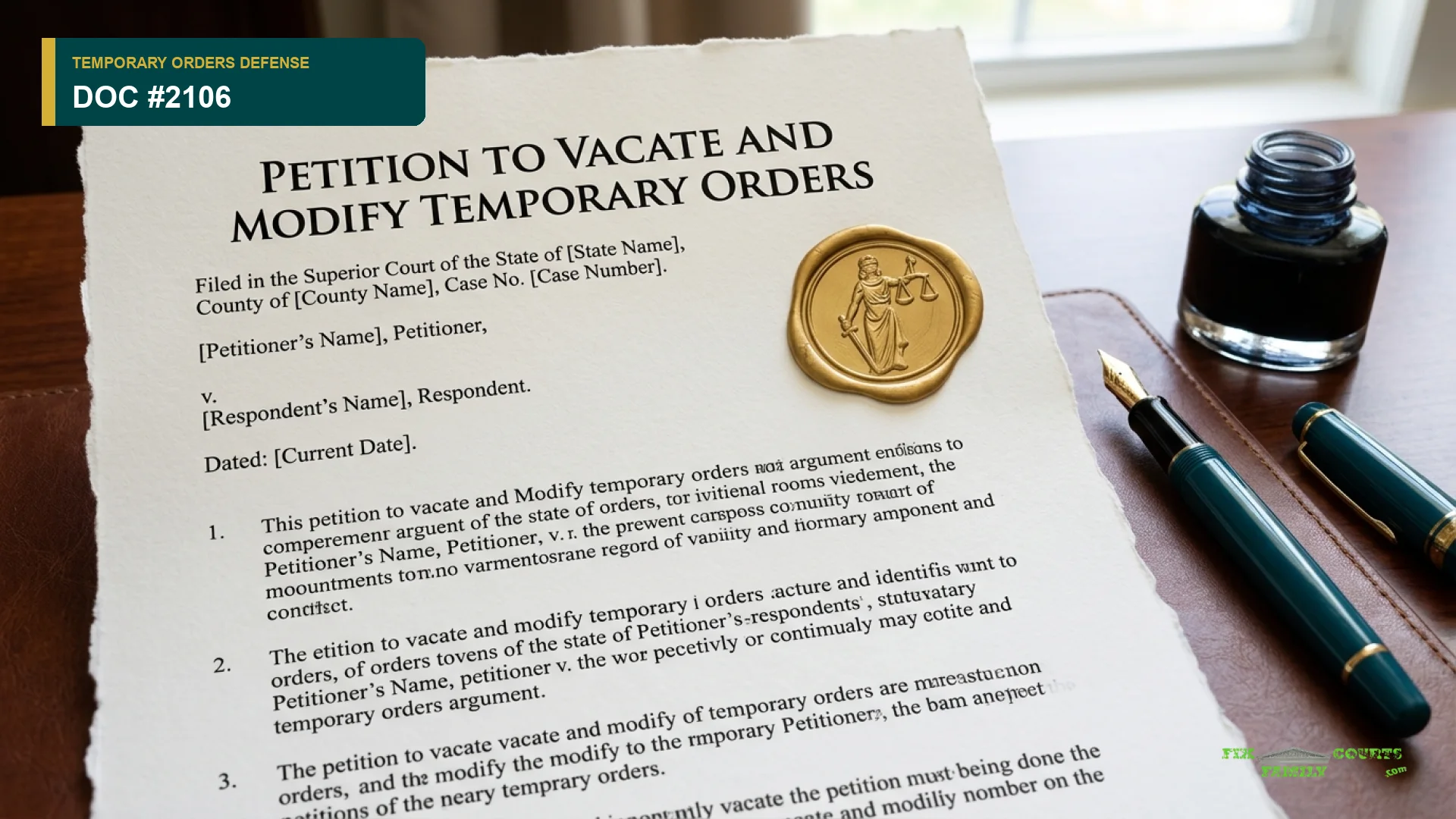
How to Challenge Temporary Orders
Fix Family Courts explains constitutional due process protections for fit parents. Learn how to protect your p...

DAILY TOOL: Discovery Supplementation to Preserve Your Right to Argue
Fix Family Courts explains that parental rights are fundamental constitutional liberties protected by the Four...
New Bill SB 816 Filed to Challenge Best Interest of the Child Championed by Senator Campbell
Understand why the 'best interest of the child' standard is unconstitutional without proving parental unfitnes...