
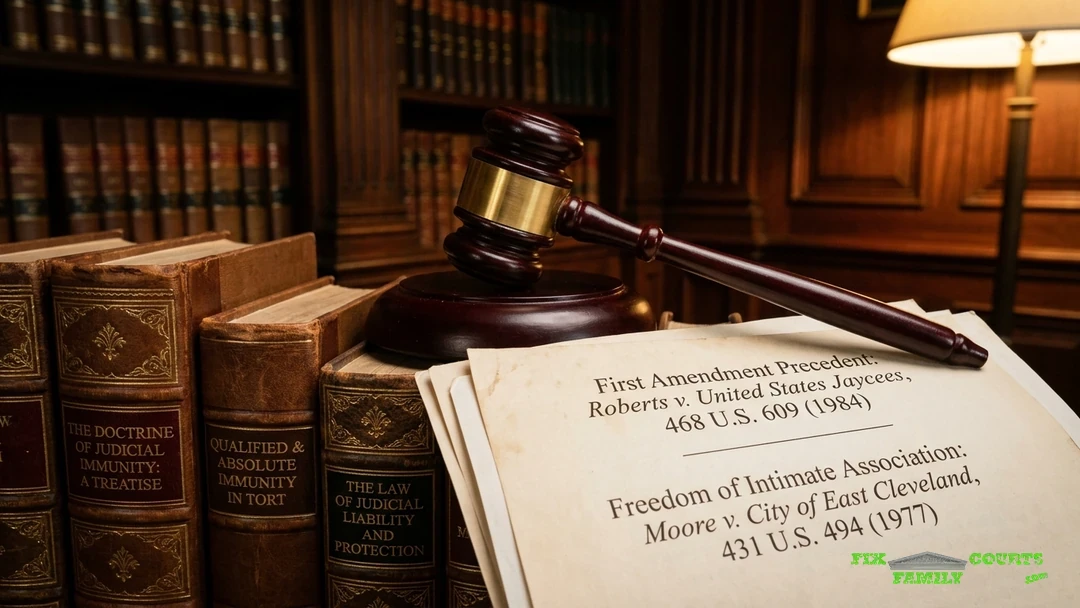
Constitutional Limits on the Best Interest of the Child Standard: Under the Fourteenth Amendment Due Process Clause, a fit parent's decisions regarding child custody and upbringing are conclusively presumed to serve the child's best interests (Troxel v. Granville, 530 U.S. 57). Trial judges possess no subject-matter jurisdiction to replace a fit parent's judgment with subjective judicial discretion absent an affirmative evidentiary finding of parental unfitness proven by clear and convincing evidence (Santosky v. Kramer).
Judges Act In Their Own Best Interests
Multiple Federal Appellate Courts have confirmed that children possess a fundamental constitutional right to familial association with both parents. The Supreme Court places the freedom of association squarely under First Amendment protections because speech without the freedom to associate is meaningless.
Familial Association: Strict First Amendment Scrutiny
SCOTUS StandardHeightened Constitutional Scrutiny: Because familial relationships involve deep personal attachments, any state action curtailing access requires enhanced constitutional scrutiny:
"We have emphasized that the First Amendment protects those relationships, including family relationships, that presuppose deep attachments and commitments to the necessarily few other individuals with whom one shares not only a special community of thoughts, experiences, and beliefs but also distinctively personal aspects of one's life."
Ending the Best Interest Trap in Custody Battles
Why does the "best interest of the child" standard turn judicial hearings into arbitrary trials without rules? Learn how to assert your fundamental constitutional rights and force the court back to strict scrutiny standards.
Equal Protection Violation: Creating Second-Class Children
14th AmendmentNo Rational Basis for Unequal Custody: When both parents in a divorce are fit, there is absolutely zero rational basis—much less a compelling state interest—for depriving the child of equal association rights with both parents.
Marital Discrimination: Stripping a child of equal parenting time based solely on the dissolved marital status of their parents creates an unconstitutional second-class status, violating the Equal Protection Clause of the Fourteenth Amendment.
Best Interest of the Child Ignores the Harm Requirement
Under Supreme Court precedent in Troxel v. Granville, state courts cannot intervene without proving actual harm. Watch Ron B. Palmer explain how family courts routinely bypass this essential constitutional gatekeeper.
Master Constitutional Family Law Strategy
Read our foundational book NOT in the Child's Best Interest or explore our constitutional training courses.

Related Educational Guides & Authorities
Continue exploring constitutional principles, case law precedents, and procedural strategies.

Making the Best Interest Determination is Political NOT Judicial
Understand why the 'best interest of the child' standard is unconstitutional without proving parental unfitnes...

When Does the Judge Get to Decide Best Interest of Your Child and Over Rule the Parent? When Does The Child Get to Over Rule the Parent?
Understand why the 'best interest of the child' standard is unconstitutional without proving parental unfitnes...

Did you Know that Supreme Court Opinions do not Support Judges or Experts Determining the Best Interest of the Child over a fit Parent?
Understand why the 'best interest of the child' standard is unconstitutional without proving parental unfitnes...