

Constitutional Motion Practice & Evidentiary Due Process in Family Court: Procedural due process guarantees litigating parents the right to timely notice, an impartial tribunal, formal evidentiary hearings, and the cross-examination of adverse witnesses before parental liberties are infringed (Armstrong v. Manzo, 380 U.S. 545). Filing timely constitutional objections and modular pre-trial motions prevents domestic relations courts from deciding fundamental custody rights through informal conferences, judicial fiats, or unsworn hearsay recommendations.
In this one hour and fifty minute video Ron and Sherry discuss the motions, where they came from, and their intended purpose. These are sample motions. They are written in a from that is generally acceptable for filing in Texas. They do NOT have any of the required elements that would make them a legal document to be filed in court. Your attorney will need to add those pieces and to validate the legality of the arguments within the motions.
These motions are written in the form of declaratory motions because every state has some form of procedure for filing declaratory motions and receiving declaratory relief. There may be better mechanisms in your state for requesting answers to pre-trial questions of law which is the basic intent of these motions. The arguments in these motions are easily adaptable to other formats that your attorney may prefer rather than the declaratory relief format.
Further training is being developed and provided through our membership site that will help you understand how the system works now compared to how it is supposed to work under our constitution. We also provide consulting services where we can further discuss these issues with you and even your attorney. We have worked directly with attorneys to make these arguments in different formats more suitable to the court's traditional approach in those locations. These motions are intended to show you in detail how to make these arguments. There is much more to proving these arguments that would usually be provided in the form of a brief or memorandum. We have created strong support and citation for these arguments and have helped attorneys craft briefs that are unique to individual cases.

Related Educational Guides & Authorities
Continue exploring constitutional principles, case law precedents, and procedural strategies.
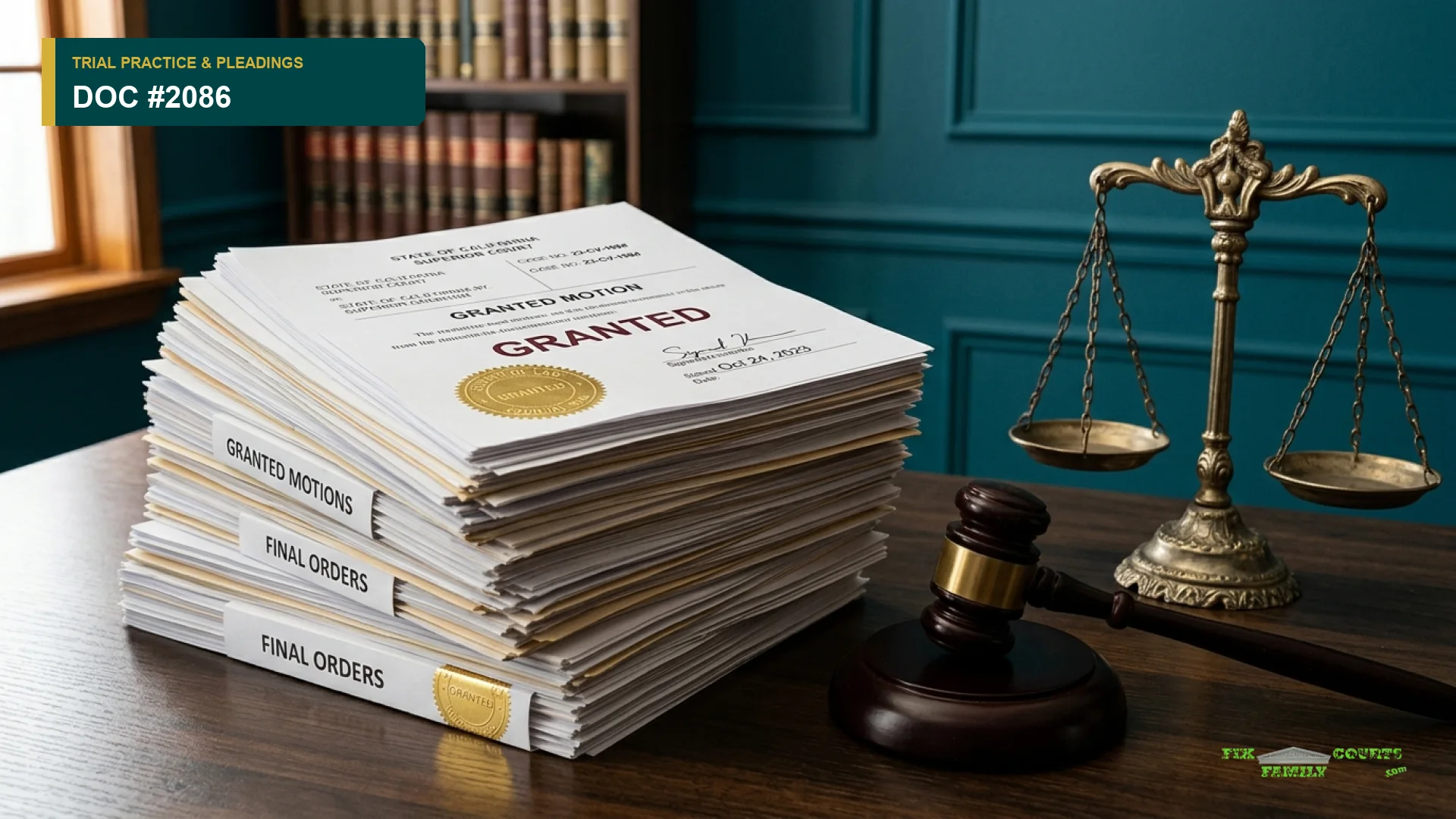
Motions to Win Child Custody
Learn how fit parents protect fundamental parental rights in custody hearings. Assert Fourteenth Amendment due...
How to work with your sample motions
Fix Family Courts explains that parental rights are fundamental constitutional liberties protected by the Four...
How to work with your sample motions
Fix Family Courts explains that parental rights are fundamental constitutional liberties protected by the Four...