

Constitutional Motion Practice & Evidentiary Due Process in Family Court: Procedural due process guarantees litigating parents the right to timely notice, an impartial tribunal, formal evidentiary hearings, and the cross-examination of adverse witnesses before parental liberties are infringed (Armstrong v. Manzo, 380 U.S. 545). Filing timely constitutional objections and modular pre-trial motions prevents domestic relations courts from deciding fundamental custody rights through informal conferences, judicial fiats, or unsworn hearsay recommendations.
Win Child Custody – Fast, Easy, Simple New Pre-Trial Motions
Prefer a dedicated theater view? Watch on our dedicated Video Watch Page →
Fix Family Courts provides parents, attorneys, and family advocates with rigorous constitutional frameworks to safeguard fundamental parental rights. Under binding Supreme Court precedents including Troxel v. Granville, Santosky v. Kramer, and Pierce v. Society of Sisters, fit parents are constitutionally presumed to act in their children's best interests. State courts lack constitutional authority to abridge custody, parenting time, or parental decision-making without strict scrutiny and clear and convincing evidence.

Related Educational Guides & Authorities
Continue exploring constitutional principles, case law precedents, and procedural strategies.
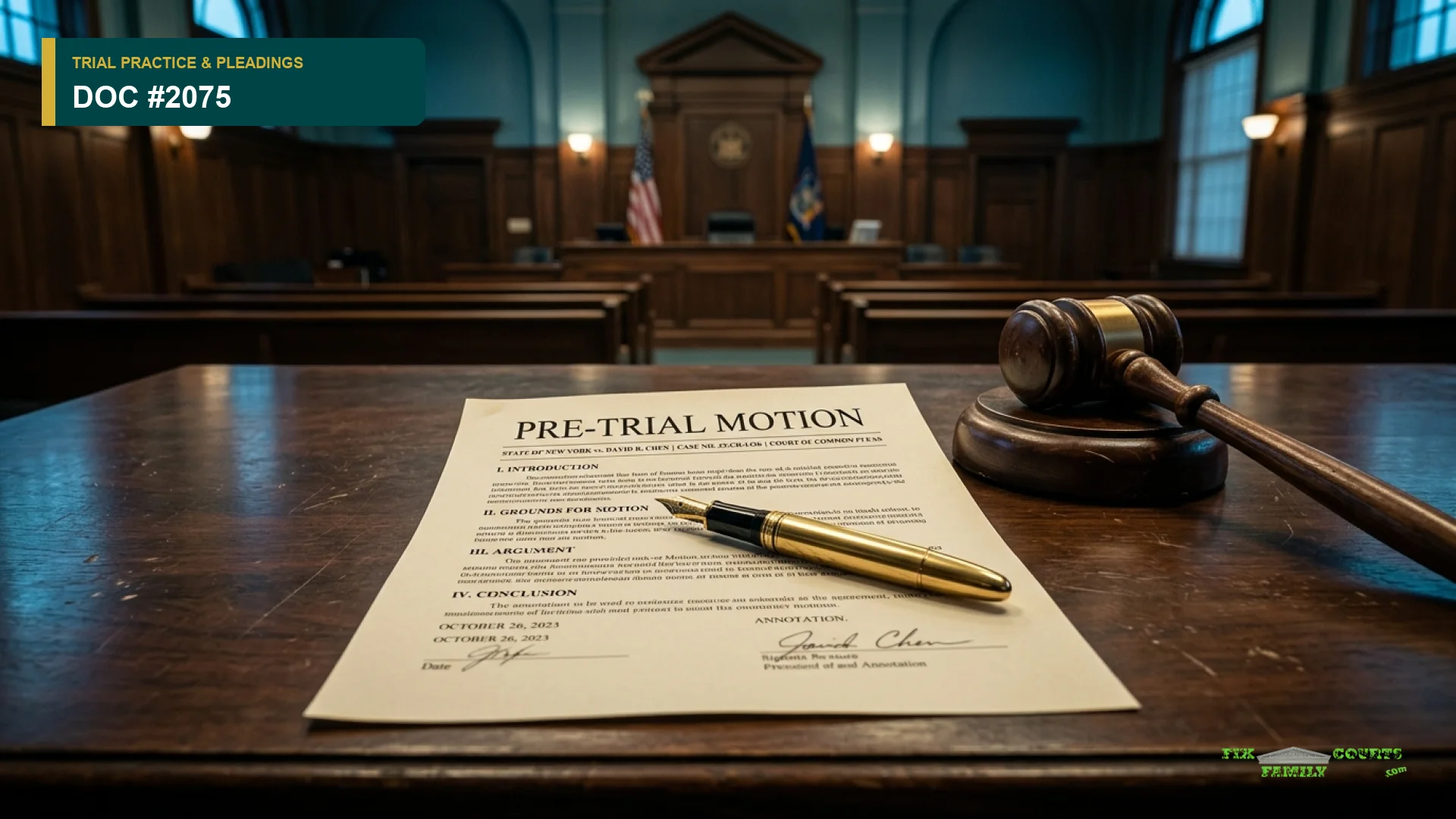
Pre-Trial Motion: Constitutional Strategy & Due Process Guide
Fix Family Courts explains that parental rights are fundamental constitutional liberties protected by the Four...
Ready To Use Motions
Fix Family Courts explains that parental rights are fundamental constitutional liberties protected by the Four...
How to work with your sample motions
Fix Family Courts explains that parental rights are fundamental constitutional liberties protected by the Four...